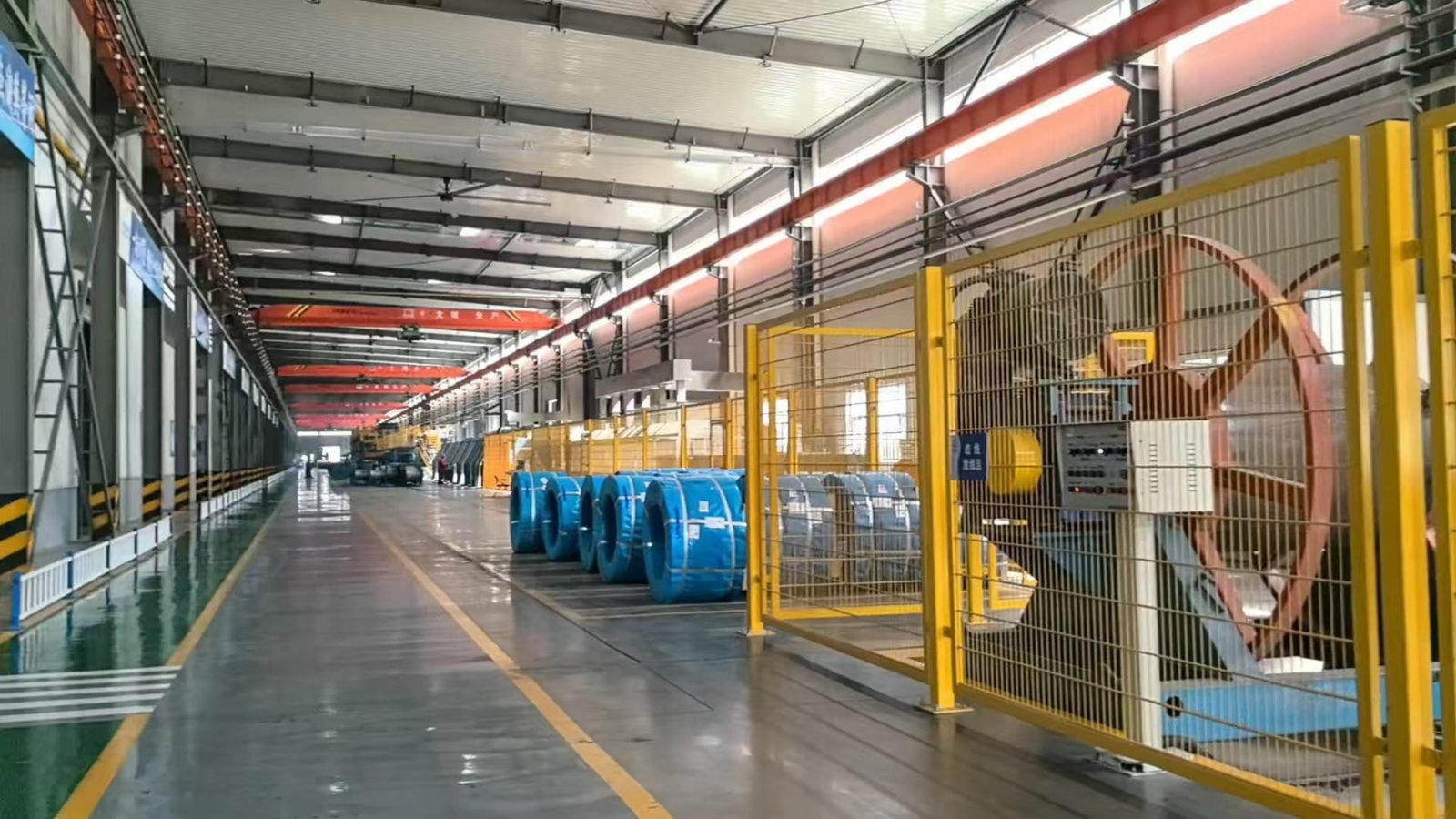
Resilience Amid Regional Diversification and Technological Upgrading
Prestressed steel wire and strand, as critical materials for infrastructure construction and industrial manufacturing, play an indispensable role in global urbanization, transportation network expansion, and renewable energy development. In 2026, the global market is poised to navigate a landscape characterized by cost volatility, regional demand differentiation, and accelerated technological transformation. According to forecasts from leading industry institutions such as Grand View Research and Statista, the global prestressed steel products market is expected to reach a value of USD 28.6 billion by 2026, with a compound annual growth rate (CAGR) of 4.2% from 2021 to 2026. This article provides an in-depth analysis of the core influencing factors, regional market dynamics, and future trends shaping the global prestressed steel wire and strand market in 2026, along with strategic recommendations for market participants.
📊 Core Influencing Factors Shaping the Global Market
1. Cost Side: Global Commodity Price Fluctuations Underpin Cost Volatility
The production cost of prestressed steel wire and strand is highly dependent on the prices of key raw materials, namely high-carbon wire rod (the base material) and zinc ingot (for anti-corrosion galvanization), as well as energy costs. The global pricing of these commodities in 2026 will be influenced by a complex interplay of supply-demand dynamics, geopolitical factors, and macroeconomic trends.
For high-carbon wire rod, its price is closely linked to the global steel market and iron ore prices. Leading commodity agencies such as CRU and McKinsey predict that iron ore prices will fluctuate within the range of USD 95-115 per ton in 2026. While the recovery of the global steel industry is expected to provide basic support for iron ore demand, the slowdown in growth of some major economies and the implementation of energy conservation and emission reduction policies in steel-producing countries may limit the upside potential of steel prices. Regionally, steel production in China, the world’s largest steel producer, is expected to remain stable with a slight increase, while production in Europe and North America may be constrained by high energy costs, leading to regional differences in high-carbon wire rod prices. It is estimated that the average global price of high-carbon wire rod (SWRH82B grade) will range from USD 780 to 850 per ton in 2026.
Zinc ingot, a core raw material for galvanized prestressed products (accounting for 54% of global zinc demand), will face structural contradictions in the global market in 2026. Bullish factors include tight global zinc ore supply—especially due to reduced output from major mines in Australia, Peru, and Canada—and low global zinc inventories, which have fallen to a 5-year low. On the other hand, bearish pressures stem from the expansion of zinc smelting capacity in China and India, as well as the sluggish demand from traditional real estate markets in Europe and North America. Major financial institutions have issued divergent forecasts for global zinc prices: Morgan Stanley predicts that London Metal Exchange (LME) zinc prices will average around USD 2,900 per ton in 2026, while Goldman Sachs expects a higher range of USD 3,100-3,500 per ton, citing strong demand from emerging infrastructure projects.
Energy costs will also be a key variable affecting production costs, particularly in Europe where natural gas prices, although lower than the 2022 peak, remain at a relatively high level. This may lead to a further shift in global prestressed steel production capacity to regions with lower energy costs, such as Southeast Asia and the Middle East.
2. Supply Side: Capacity Concentration and Green Transformation Accelerate
The global prestressed steel wire and strand market is witnessing an increasing trend of capacity concentration, with leading enterprises expanding their market share through technological advantages, scale effects, and global layout. Key players such as Nippon Steel Corporation (Japan), ArcelorMittal (Luxembourg), POSCO (South Korea), Baowu Group (China), and Celsa Group (Spain) collectively account for approximately 35% of the global market share. In 2026, new production capacity will be mainly concentrated in Asia and the Middle East: China is expected to add 1.2 million tons of prestressed steel strand capacity, focusing on high-end products; Saudi Arabia and the UAE are planning to build integrated steel plants with supporting prestressed steel production lines to meet the demand of local large-scale infrastructure projects.
Technological upgrading and green transformation are becoming the core competitiveness of the supply side. High-strength and low-relaxation products are gaining wider adoption, with the global market penetration rate of 1860MPa-grade prestressed steel strands expected to exceed 80% in 2026. Leading enterprises are also developing ultra-high-strength products (2000MPa and above) for special applications such as ultra-high-rise buildings and deep-sea bridges. In terms of green manufacturing, electric furnace short-process production, water-based anti-corrosion coatings, and renewable energy utilization are being promoted. For example, ArcelorMittal’s European plants have reduced carbon emissions by 40% through the use of hydrogen-based direct reduction ironmaking technology, while Baowu Group’s new prestressed steel production lines in China have achieved 100% green electricity consumption.
3. Demand Side: Regional Diversification and Emerging Field Growth Drive Market Resilience
The global demand for prestressed steel wire and strand in 2026 will show significant regional differentiation, with infrastructure investment and emerging industry development being the main drivers. Traditional real estate demand, while still important, will remain under pressure in some regions.
In Asia-Pacific, the largest market for prestressed steel products (accounting for 52% of global demand in 2024), demand will be driven by large-scale infrastructure projects. China’s continued investment in high-speed railways, urban rail transit, and water conservancy projects is expected to drive annual demand for prestressed steel strands to exceed 5 million tons. India’s “National Infrastructure Pipeline” (NIP) program, which includes 7,400 projects with a total investment of USD 1.4 trillion, will boost demand for prestressed steel in road and bridge construction. Southeast Asian countries such as Vietnam, Indonesia, and Thailand are also witnessing strong demand growth due to urbanization and industrialization, with an expected annual growth rate of 6.5% in prestressed steel consumption.
In Europe, demand will be supported by the renovation of aging infrastructure and the development of renewable energy. The European Union’s “Next Generation EU” recovery plan allocates EUR 240 billion to infrastructure upgrading, including the renovation of bridges, tunnels, and water supply systems, which will drive demand for high-performance prestressed steel products. The growth of offshore wind power is another key driver—each offshore wind turbine requires approximately 8-12 tons of prestressed steel for its foundation, and Europe’s offshore wind power capacity is expected to increase by 25GW in 2026, driving significant demand for corrosion-resistant prestressed steel.
In North America, the Infrastructure Investment and Jobs Act (IIJA) in the United States, which provides USD 1.2 trillion for infrastructure construction, will be the main driver of demand. The renovation of highways, bridges, and public transportation systems will boost consumption of prestressed steel wire and strand. The Canadian government’s investment in Arctic shipping routes and northern infrastructure will also contribute to demand growth. However, the slowdown in the U.S. real estate market may constrain some demand, with the residential construction sector accounting for only 12% of total prestressed steel demand in North America.
Emerging fields such as renewable energy (wind, solar), marine engineering, and nuclear power are becoming new growth engines. The global renewable energy sector is expected to drive an additional 300,000 tons of prestressed steel demand in 2026. Marine engineering projects, such as offshore oil and gas platforms and cross-sea bridges, require high-corrosion-resistance prestressed steel, and the global marine engineering market is expected to grow by 5.8% in 2026. Nuclear power projects in China, India, and Eastern Europe also require large quantities of prestressed steel for reactor containment vessels and other critical components.
🌍 Regional Market Dynamics in 2026
1. Asia-Pacific: Dominant Market with Steady Growth
Asia-Pacific will remain the largest and fastest-growing regional market for prestressed steel wire and strand in 2026, with a projected market share of 54%. China, India, and Southeast Asian countries will be the key growth drivers. The region’s advantage lies in strong infrastructure investment momentum, a large manufacturing base, and increasing demand for high-end products. However, challenges include intense price competition in low-end products and fluctuations in raw material prices.
2. Europe: Mature Market with Infrastructure Renovation Opportunities
Europe’s market will grow at a moderate CAGR of 3.1% in 2026, driven by infrastructure renovation and renewable energy development. The region has strict quality and environmental standards, which favor high-performance, green prestressed steel products. Import demand may increase due to limited local production capacity, especially for special-grade products.
3. North America: Infrastructure Investment Boosts Demand
The North American market will experience accelerated growth in 2026, with a projected CAGR of 4.5%. The U.S. infrastructure bill will be the main catalyst, while the Canadian infrastructure investment plan will provide additional support. The region’s focus on high-quality and durable infrastructure will drive demand for high-strength and corrosion-resistant prestressed steel products.
4. Middle East & Africa: Emerging Market with Large Potential
The Middle East & Africa region will be an emerging bright spot, with a projected CAGR of 7.2% in 2026. Large-scale infrastructure projects such as the Dubai Expo Legacy Project, Saudi Arabia’s NEOM City, and Nigeria’s road network expansion will drive strong demand. The region’s high temperature and high humidity environment also requires prestressed steel products with excellent corrosion resistance, creating opportunities for high-end product suppliers.
📈 2026 Global Market Trend Forecast
Overall, the global prestressed steel wire and strand market in 2026 will show a “steady growth with regional differentiation” trend, with the global market size expected to reach 12.8 million tons. Price-wise, the global average price of prestressed steel strands (1860MPa, Φ15.2mm) is expected to fluctuate in the range of USD 950-1,050 per ton, with the first half year’s prices being relatively firm due to seasonal demand peaks and low raw material inventories, and a slight correction possible in the second half as new production capacity is released.
Key trends to watch include: (1) The increasing popularity of high-strength, low-relaxation, and corrosion-resistant products, with zinc-aluminum-magnesium alloy-coated prestressed steel gaining market share; (2) The acceleration of green manufacturing, with low-carbon production processes becoming a key competitive factor; (3) The growth of the rental market for prestressed steel products in some regions, especially for large-scale infrastructure projects, to reduce capital pressure; (4) The impact of geopolitical risks and supply chain disruptions on regional market stability, requiring enterprises to strengthen supply chain resilience.
💡 Strategic Recommendations for Global Market Participants
1. Optimize Global Supply Chain Layout
Enterprises should establish a diversified global supply chain network to reduce the impact of regional raw material price fluctuations and geopolitical risks. For example, setting up production bases or procurement centers in Asia-Pacific (low-cost raw materials), Europe (high-end market), and the Middle East (emerging demand) can help balance costs and market access. It is also advisable to sign long-term supply contracts with raw material suppliers to lock in costs.
2. Focus on High-End Product R&D and Technological Upgrading
Investing in R&D of high-strength (2000MPa and above), corrosion-resistant (zinc-aluminum-magnesium alloy coating, epoxy coating), and low-carbon prestressed steel products can help gain a competitive edge in mature markets such as Europe and North America. Developing customized products for emerging fields such as offshore wind power and marine engineering is also a key growth strategy.
3. Adapt to Regional Market Characteristics and Policy Requirements
Market participants should tailor their product portfolios and marketing strategies to regional characteristics: in Asia-Pacific, focus on cost competitiveness and large-scale supply capacity; in Europe, emphasize environmental protection and product quality certification; in the Middle East & Africa, highlight corrosion resistance and adaptability to harsh environments. Complying with local policies such as carbon emission regulations and import tariffs is also crucial for market entry.
4. Strengthen Digital Transformation and Smart Manufacturing
Adopting digital technologies such as IoT, big data, and AI in production processes can improve production efficiency, reduce costs, and enhance product quality stability. Building smart factories can also help enterprises respond quickly to market demand changes and improve customer service levels. For example, real-time monitoring of production parameters can reduce product defect rates by 20-30%.
🔍 Conclusion
2026 will be a year of opportunities and challenges for the global prestressed steel wire and strand market. While cost volatility and regional demand differentiation pose challenges, infrastructure investment in major economies and the growth of emerging fields such as renewable energy provide strong growth momentum. Market participants that can adapt to regional characteristics, accelerate technological upgrading, optimize supply chain layout, and embrace green and digital transformation will be well-positioned to capture growth opportunities. The global prestressed steel wire and strand market is expected to maintain resilient growth, contributing to the development of global infrastructure and sustainable industries.